


All Products
-
Nuclear Radiation Protection
-
Nuclear Radiation Detector
-
Copper Foil Shielding
-
RF Shielded Doors
-
RF Shielded Windows
-
Radiation Protection Lead Glass
-
Non Magnetic Tool Kit
-
RF Shielded Chamber
-
Honeycomb Waveguide Air Vents
-
Conductive Adhesive Copper Tape
-
Copper Wire Mesh
-
X Ray Lead Glass
-
EMI Shielding Gasket
-
Electrically Conductive Fabric
-
Radiation Protection Door
-
Radiation Protection X Ray
-
Faraday Cage MRI
-
Copper Wire Wool
-
MRI LED Lighting
-
Non Magnetic Wheelchair
-
Non Magnetic Stretcher
-
 AnasBrass honeycomb vent Looks Very Nice
 -
 SatheeshMRI/RF doors are shining with handles, Thank you My friend.
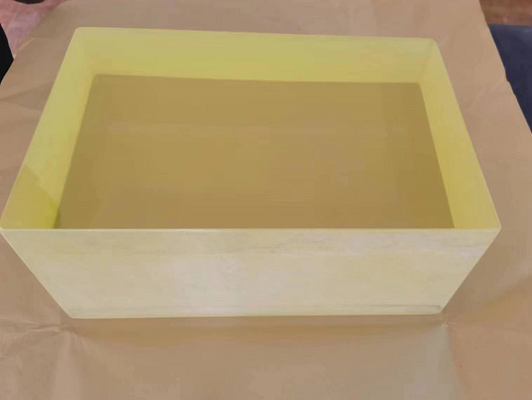
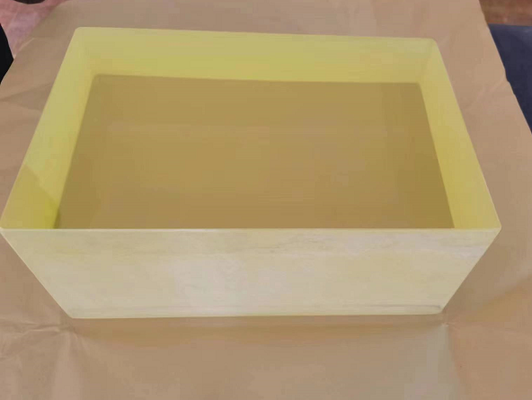
High Impact Resistance Radiation Shielding Glass Series ZF2-7 Protective Glass for X Ray Imaging Medical and Industrial

| Brand Name | Jovi |
|---|---|
| Certification | CE |
| Model Number | 1-cf-15 |
| Document | Lead glass specification.pdf |
| Minimum Order Quantity | 1 Pc |
| Price | $730/pc-$5380/pc |
| Packaging Details | In Wooden Case Or Customized |
| Delivery Time | 5-8 Work Days |
| Payment Terms | L/C,T/T |
| Supply Ability | 2000 Pcs Per Month |
Product Details
| Impact Resistance | High | Glass Composition | Rmon-pbo-sio2 (B2O3) |
|---|---|---|---|
| Size Range | 0.2m*0.3m-2.4m*1.2m | Operating Temperature | -20°C To 60°C |
| Edge Chamfer | 0.5 Mm × 45° | Flatness Tolerance | <0.1% Of Diagonal |
| Highlight | Glass X-Ray,Premium X-Ray Radiation,Professional Shielding Medical |
||
Product Description
Jovvi Lead Glass for X-ray, CT, SPECT, PET‑CT & Nuclear Medicine – Version 5 (Installation & Maintenance Guide)
1. Quality – Installation-Ready Design Features
Jovvi lead glass is manufactured with field installation requirements built in. Key quality attributes that affect installation success:
| Feature | Benefit |
|---|---|
| Edge chamfer (0.5 mm × 45°) | Prevents chipping during handling and frame insertion |
| Laser-etched orientation arrow | Ensures correct side faces control room (uniform lead distribution) |
| Flatness tolerance <0.1% of diagonal | No wavy distortion when viewing monitors through glass |
| Pre-drilled edge holes (optional) | For mechanical clamping without drilling on-site |
| Weight marking (kg/m²) printed on protective film | Simplifies crane/lifting planning |
Each panel is stress‑relieved via controlled annealing (cooling rate <5°C/hour from 450°C to 100°C). Residual stress measured by polariscope is <20 nm/cm – below ASTM F218 threshold for spontaneous fracture.
2. Application Scenarios – Installation by Room Type
Different nuclear medicine and radiology rooms require different mounting methods.
A. Standard Drywall + Lead Lining (X‑ray & CT)
- Framing: Steel studs with 1.6 mm lead sheet laminated to drywall
- Window rough opening: +15 mm wider and taller than glass panel
- Mounting: Neoprene gasket (Shore A 40–50) on all four edges, compression by aluminum trim
- Sealing: Lead tape (2 mm thick, 50 mm wide) over perimeter gaps
B. Modular Lead‑Lined Panels (SPECT & PET‑CT)
- Framing: Prefabricated lead‑lined panels (2–3 mm Pb) with factory‑cut window recess
- Mounting: Glass sits in recess with silicone rubber gasket; clamping frame bolts torqued to 2.5 N·m (M6 fasteners) – do not exceed 3.0 N·m
- Sealing: Lead‑loaded epoxy injected into corner joints
C. Retrofit into Existing Window Openings (Older Nuclear Medicine Departments)
- Challenge: Existing frames may not support heavy lead glass (70–110 kg/m²)
- Jovvi solution: Provide steel sub‑frame that transfers weight to floor slab, not to old masonry
- Minimum edge bite: Glass must be supported by frame at least 15 mm on each side
D. Hot Lab (Radiopharmacy) Pass‑Through Viewing Ports
- Mounting: Small panel (typically 300×400 mm) set into a lead‑brick wall or laminar flow hood
- Method: Embedded directly into lead brick mortar or clamped with stainless steel flange
- No frame required if wall thickness >50 mm lead brick
3. Production Assurance – Pre‑Delivery Preparation
Jovvi provides the following documents before glass shipment to ensure successful installation:
- Shop drawing showing exact dimensions, hole locations (if any), and orientation arrow
- Recommended frame profile (CAD drawing of aluminum or steel retaining frame)
- Gasket specification sheet (durometer, material compatibility, thickness)
- Lifting and handling instructions (suction cups required for panels >30 kg; two-person lift for >50 kg)
- Site readiness checklist (see Section 4)
4. On‑Site Installation Checklist (To Be Completed by Hospital Team)
| Step | Action | Pass/Fail |
|---|---|---|
| 1 | Verify rough opening dimensions match shop drawing (±2 mm) | |
| 2 | Confirm wall/frame can support glass weight (calculated by Jovvi) | |
| 3 | Clean frame channel – remove debris, old sealant, sharp burrs | |
| 4 | Install neoprene gasket on all four sides (continuous, no splices at corners) | |
| 5 | Using suction cups, lift glass and insert into frame – do not drag edges | |
| 6 | Install retaining trim or clamping plate – tighten bolts to specified torque (2.5 N·m) | |
| 7 | Apply lead tape over perimeter gap (overlap corners by 20 mm) | |
| 8 | Perform radiation leakage test (see Version 3, Q5) |
Critical warning: Do not use silicone sealant alone as structural support – it provides no compression resistance and glass will shift over time, breaking edge seals.
5. Maintenance & Cleaning
Daily/Weekly Cleaning (for all radiology and nuclear medicine rooms)
- Acceptable cleaners: 70% isopropyl alcohol, 10% mild soap solution, quaternary ammonium wipes (e.g., CaviWipes)
- Unacceptable: Abrasive powders, hydrofluoric acid, ammonia‑based glass cleaners (they attack lead oxide surface)
- Method: Spray onto soft microfiber cloth, not directly onto glass (prevents seepage into frame)
Annual Inspection (recommended by Jovvi)
- Visual check for new bubbles, edge chips, or discoloration (compare to color reference card supplied with glass)
- Torque check – re‑tighten clamping bolts to 2.5 N·m (if frame uses mechanical clamps)
- Lead tape inspection – replace any peeling or cracked tape
- Radiation survey at glass perimeter – should be unchanged from post‑installation baseline
5‑Year Major Service
- Jovvi offers on‑site re‑certification visit (optional):
- Measure lead equivalence non‑destructively using transmission method
- Inspect for browning using spectrophotometer (ΔE measurement)
- Replace edge gaskets and lead tape
- Issue updated certificate for regulatory file
6. Common Installation Mistakes & Prevention
| Mistake | Consequence | Jovvi Prevention |
|---|---|---|
| Overtightening bolts (>3.0 N·m) | Glass cracking at corners | Torque specification sticker on protective film |
| No gasket (glass on metal) | Point loading → fracture | Gasket included with each panel (optional) |
| Rough handling without suction cups | Edge chips weakening shielding | Lifting instruction placard in crate |
| Sealing gaps with standard caulk (not lead tape) | Radiation leakage at edges | Lead tape supplied in same shipment |
Recommended Products
