


All Products
-
Nuclear Radiation Protection
-
Nuclear Radiation Detector
-
Copper Foil Shielding
-
RF Shielded Doors
-
RF Shielded Windows
-
Radiation Protection Lead Glass
-
Non Magnetic Tool Kit
-
RF Shielded Chamber
-
Honeycomb Waveguide Air Vents
-
Conductive Adhesive Copper Tape
-
Copper Wire Mesh
-
X Ray Lead Glass
-
EMI Shielding Gasket
-
Electrically Conductive Fabric
-
Radiation Protection Door
-
Radiation Protection X Ray
-
Faraday Cage MRI
-
Copper Wire Wool
-
MRI LED Lighting
-
Non Magnetic Wheelchair
-
Non Magnetic Stretcher
-
 AnasBrass honeycomb vent Looks Very Nice
 -
 SatheeshMRI/RF doors are shining with handles, Thank you My friend.
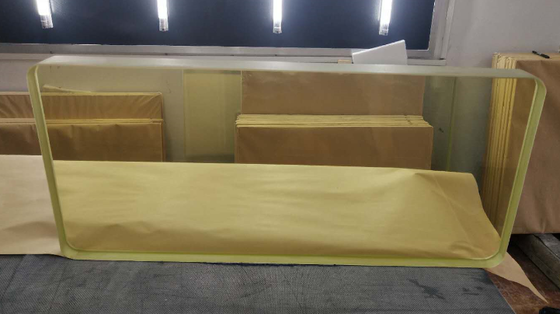
High Impact Resistance X Ray Protection Glasses Protective Eyewear for Medical Industrial and Scientific Sizes 0.2m 0.3m to 2.4m 1.2m
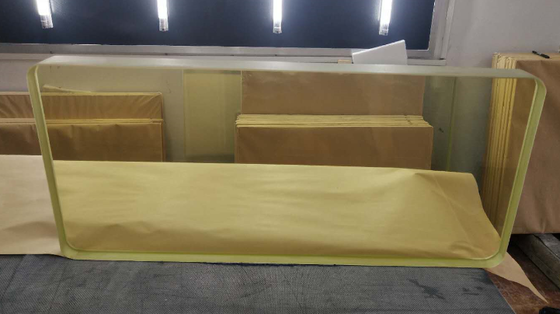

| Brand Name | Jovi |
|---|---|
| Certification | CE |
| Model Number | 1-cf-15 |
| Document | Lead glass specification.pdf |
| Minimum Order Quantity | 1 Pc |
| Price | $620/pc-$5380/pc |
| Packaging Details | In Wooden Case Or Customized |
| Delivery Time | 5-8 Work Days |
| Payment Terms | L/C,T/T |
| Supply Ability | 2000 Pcs Per Month |
Product Details
| Size Range | 0.2m*0.3m-2.4m*1.2m | Operating Temperature | -20°C To 60°C |
|---|---|---|---|
| Lead Oxide Content | 68-72 Wt% | Flatness Tolerance | <0.5 Mm Over 1m |
| Transmission At 511 KeV | 15% (composite) | Weight Density | 70 Kg/m² (composite) |
| Highlight | Glass X-Ray,Premium X-Ray Medical,Professional Medical Industrial |
||
Product Description
Technical Deep Dive: 511 keV Shielding Physics (PET‑CT Focus)
1. Quality – Why 511 keV Is Different
511 keV annihilation photons from PET (¹⁸F‑FDG) have fundamentally different interaction physics than diagnostic X‑rays.
| Parameter | Diagnostic X‑ray (120 kVp) | PET (511 keV) |
|---|---|---|
| Dominant interaction | Photoelectric effect (μ ∝ Z⁴/E³) | Compton scattering (μ ∝ Z/E) |
| Lead glass attenuation | Highly efficient | Moderately efficient |
| Half‑value layer (Pb) | ~0.26 mm | ~4.0 mm |
| Tenth‑value layer (Pb) | ~0.86 mm | ~13.3 mm |
Consequence: A 2.5 mm Pb lead glass panel that stops 99.9% of 120 kVp X‑rays stops only ~35% of 511 keV photons.
Jovvi quality for PET‑CT means:
-
High lead oxide content (68–72 wt% – maximum feasible) to increase density and Compton cross‑section
-
Minimum bubble interference – any bubble >0.3 mm reduces effective density locally
-
Flatness <0.5 mm over 1 m – composite windows require precise lamination
2. Application Scenarios – Composite Window Engineering
Jovvi offers three shielding strategies for PET‑CT control booths:
Option A: Thick Monolithic Lead Glass
-
5.0–5.5 mm Pb equivalent (physical 28–32 mm)
-
Weight: 110–130 kg/m²
-
Transmission at 511 keV: ~50% (5 mm Pb) to ~40% (5.5 mm Pb)
-
Use when: Budget allows, floor loading capacity >200 kg/m², staff stay >3 m from glass
Option B: Jovvi Composite Window (Recommended)
-
Construction: 2.5 mm Pb lead glass + 10 mm lead acrylic + 2.5 mm Pb lead glass
-
Total Pb equivalent: ~8 mm at 511 keV (due to acrylic's lower effective Z, actual attenuation is ~7 mm Pb equivalent)
-
Transmission at 511 keV: ~15%
-
Weight: ~70 kg/m² (40% lighter than 5.5 mm monolithic)
-
Use when: Optimal balance of safety, weight, and cost
Option C: Lead Glass + Supplementary Wall Shielding
-
Glass alone: 3.0 mm Pb (physical 18 mm)
-
Additional 2 mm lead sheet on walls around window
-
Staff positioned >4 m from glass
-
Use when: Retrofit where frame cannot support heavy composite or thick monolithic
Attenuation comparison (511 keV, narrow beam):
| Solution | Thickness | % Transmission | Weight (kg/m²) | Relative Cost |
|---|---|---|---|---|
| 2.5 mm Pb glass only | 15 mm | 65% | 55 | 1.0x |
| 3.5 mm Pb glass only | 20 mm | 53% | 75 | 1.4x |
| 5.0 mm Pb glass only | 28 mm | 50% | 110 | 2.2x |
| Jovvi composite (2.5+10+2.5) | ~35 mm total | 15% | 70 | 1.9x |
Composite provides 3x better shielding than 5 mm monolithic at 2/3 the weight and similar cost.
3. Production Assurance – Composite Window Manufacturing
Composite windows require three separate quality controls:
-
Lead glass panels (front and rear) – each tested individually for 140 keV and 511 keV
-
Lead acrylic middle layer – tested for attenuation (typically 2.5–3.0 mm Pb equivalent at 140 keV; ~1.5 mm Pb eq. at 511 keV)
-
Lamination integrity – optical bonding with UV‑stable adhesive, tested for:
-
No delamination under thermal cycling (-10°C to +40°C, 10 cycles)
-
No haze increase after 500 hours gamma exposure
-
Recommended Products
