


All Products
-
Nuclear Radiation Protection
-
Nuclear Radiation Detector
-
Copper Foil Shielding
-
RF Shielded Doors
-
RF Shielded Windows
-
Radiation Protection Lead Glass
-
Non Magnetic Tool Kit
-
RF Shielded Chamber
-
Honeycomb Waveguide Air Vents
-
Conductive Adhesive Copper Tape
-
Copper Wire Mesh
-
X Ray Lead Glass
-
EMI Shielding Gasket
-
Electrically Conductive Fabric
-
Radiation Protection Door
-
Radiation Protection X Ray
-
Faraday Cage MRI
-
Copper Wire Wool
-
MRI LED Lighting
-
Non Magnetic Wheelchair
-
Non Magnetic Stretcher
-
 AnasBrass honeycomb vent Looks Very Nice
 -
 SatheeshMRI/RF doors are shining with handles, Thank you My friend.
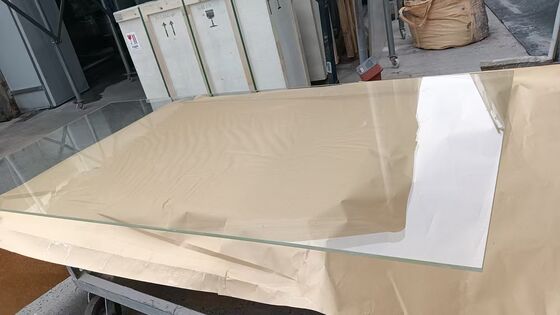
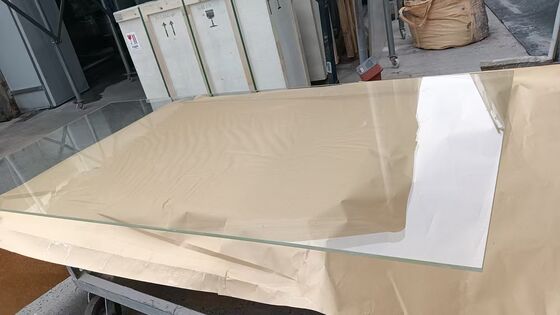
Customized 1200mm X 2400mm Radiation Shielding Lead Glass with High Impact Resistance and High Visible Light Transmission

| Brand Name | Jovi |
|---|---|
| Certification | CE |
| Model Number | 1-cf-15 |
| Document | Lead glass specification.pdf |
| Minimum Order Quantity | 1 Pc |
| Price | $709/pc-$3840/pc |
| Packaging Details | In Wooden Case Or Customized |
| Delivery Time | 5-8 Work Days |
| Payment Terms | L/C,T/T |
| Supply Ability | 2000 Pcs Per Month |
Product Details
| Material | Lead Glass | Size | 1200mm X 2400mm |
|---|---|---|---|
| Visible Transmission | 83% | Radiation Leakage | 0.02 MR/hr |
| Surface Dose Rate | 0.09 MR/hr | Lead Equivalence | 3.0 Mm Pb |
| Highlight | 1200X2400Mm Lead Glass,Glass Shielding,Professional Radiation Shielding |
||
Product Description
Case Studies from Real Hospital Installations
Case Study 1: University Hospital, Germany – SPECT Room Upgrade
Background: 1,500 SPECT procedures/year (⁹⁹ᵐTc), existing window was 1.5 mm Pb lead acrylic installed 6 years ago – severe yellowing, visual obstruction.
Jovvi solution: 2.8 mm Pb nuclear‑grade lead glass, 1200×800 mm, with CeO₂ stabilization.
Result:
- Visible transmission improved from 62% (degraded acrylic) to 83% (new Jovvi glass)
- Radiation leakage at glass perimeter: 0.02 mR/hr (well below 0.05 mR/hr limit)
- 18 months post‑installation: no measurable browning (ΔE = 0.8)
- Technologist reported reduced eye strain and improved ability to see patient positioning
Case Study 2: PET‑CT Center, South Korea – Composite Window
Background: High‑volume PET‑CT (40 patients/day, ¹⁸F‑FDG, average 12 mCi/patient). Control booth had 4 mm Pb monolithic lead glass – staff reported dose rate at glass surface 0.8 mR/hr (above local limit of 0.2 mR/hr).
Jovvi solution: Composite window – 2.5 mm Pb glass + 10 mm lead acrylic + 2.5 mm Pb glass, 1500×1000 mm.
Result:
- Surface dose rate reduced to 0.09 mR/hr (89% reduction)
- Glass weight: 72 kg/m² vs. 98 kg/m² for 4 mm Pb monolithic (26% lighter)
- Staff confidence improved; no additional wall shielding needed
- Payback period: 14 months (avoided cost of supplementary lead sheet installation)
Case Study 3: District Hospital, Brazil – X‑ray + CT + SPECT Shared Control Room
Background: Single control room serving three modalities (chest X‑ray, CT, SPECT). Original design used separate windows for each – messy, high cost.
Jovvi solution: Single large window 2000×1200 mm, 3.0 mm Pb equivalent nuclear grade (handles highest modality – SPECT).
Result:
- One window for all three rooms, reducing frame and installation cost by 35%
- Staff can see all three patients simultaneously – improved workflow
- Lead equivalence verified at 100 kVp (X‑ray), 140 keV (SPECT), and 511 keV (not applicable – no PET‑CT on site)
- Hospital saved $4,500 compared to three separate windows
Case Study 4: Hot Lab Renovation, USA – Radiopharmacy Viewing Port
Background: Fume hood for ⁹⁹ᵐTc and ¹⁸F‑FDG preparation. Existing port was standard laboratory glass (no shielding) – finger dose to pharmacist when drawing doses.
Jovvi solution: 2.5 mm Pb lead glass viewing port, 400×300 mm, installed into 1 inch lead brick wall.
Result:
- Dose rate at pharmacist position: from 2.5 mR/hr to 0.08 mR/hr (97% reduction)
- Glass clarity sufficient to read syringe graduations (critical for accuracy)
- Pharmacist reported "no more hand fatigue from holding syringe behind portable shield"
Lessons Learned Across All Cases
| Success Factor | Common Pitfall |
|---|---|
| Measure actual dose rates before specifying Pb equivalent | Guessing Pb eq. based on room size alone |
| Include CeO₂ for nuclear medicine | Using standard X‑ray grade in gamma environment |
| Verify frame can support weight | Assuming old frame is adequate |
| Order composite for PET‑CT (not monolithic) | Assuming "thicker is better" – often wrong |
| Install per Jovvi torque specs | Over‑tightening bolts → cracked glass |
Recommended Products
