


All Products
-
Nuclear Radiation Protection
-
Nuclear Radiation Detector
-
Copper Foil Shielding
-
RF Shielded Doors
-
RF Shielded Windows
-
Radiation Protection Lead Glass
-
Non Magnetic Tool Kit
-
RF Shielded Chamber
-
Honeycomb Waveguide Air Vents
-
Conductive Adhesive Copper Tape
-
Copper Wire Mesh
-
X Ray Lead Glass
-
EMI Shielding Gasket
-
Electrically Conductive Fabric
-
Radiation Protection Door
-
Radiation Protection X Ray
-
Faraday Cage MRI
-
Copper Wire Wool
-
MRI LED Lighting
-
Non Magnetic Wheelchair
-
Non Magnetic Stretcher
-
 AnasBrass honeycomb vent Looks Very Nice
 -
 SatheeshMRI/RF doors are shining with handles, Thank you My friend.
Transparency x ray protection glasses with high impact resistance mechanical strength engineered to provide superior radiation shielding
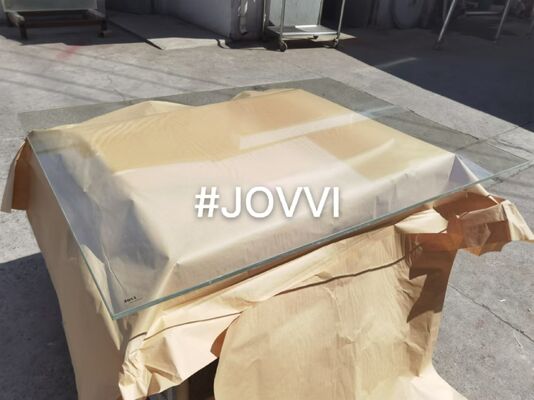

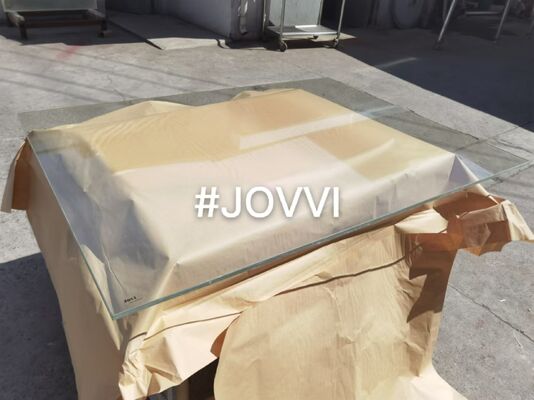
| Brand Name | Jovi |
|---|---|
| Certification | CE |
| Model Number | 1-cf-15 |
| Document | Lead glass specification.pdf |
| Minimum Order Quantity | 1 Pc |
| Price | $2130/pc-$9380/pc |
| Packaging Details | In Wooden Case Or Customized |
| Delivery Time | 5-8 Work Days |
| Payment Terms | L/C,T/T |
| Supply Ability | 2000 Pcs Per Month |
Product Details
| Size | 1200mm X 2400mm | Transmittance | 85% - 95% |
|---|---|---|---|
| Material | Lead Glass | Composition | Rmon-pbo-sio2 (B2O3) |
| Density | 4.1g/cm³,4.3g/cm³,4.7g/cm³,5.2g/cm³ | Impact Resistance | High |
| Highlight | Glass X-Ray,Premium X-Ray Radiation,Professional Radiation Shielding |
||
Product Description
Radiation Oncology (Linac Bunkers)
1. Quality – Shielding for Megavoltage Energies (6–18 MV)
Linear accelerators (linacs) produce megavoltage X‑rays (6–18 MV) – far higher energy than diagnostic or nuclear medicine. Standard lead glass is inadequate.
| Parameter | Diagnostic CT (≤150 kVp) | Linac (6 MV) | Linac (18 MV) |
|---|---|---|---|
| Photon energy | 0.1–0.15 MeV | 6 MeV | 18 MeV |
| Half‑value layer (lead) | 0.26 mm | ~16 mm | ~30 mm |
| Lead glass effectiveness | Excellent | Poor (impractical thickness) | Negligible |
Jovvi Linac Solution: Lead glass is NOT used as primary shielding for megavoltage. Instead, Jovvi provides:
-
Secondary viewing ports – Small lead glass windows (≤2.0 mm Pb) for optical viewing only, placed behind primary concrete/lead shielding.
-
Mirror systems – Lead glass not directly in beam path.
-
CCTV integration – Glass replaced by cameras + monitors (Jovvi does not supply cameras, but provides lead‑glass‑equivalent monitor placement guidance).
2. Application Scenarios
Scenario A: Linac Control Room Viewing Window
-
Challenge: Regulators require direct line‑of‑sight to patient. But primary shield is 1.5–2.0 m of concrete.
-
Jovvi solution: Bunker periscope system – Jovvi lead glass used at two 45° mirrors, not in direct beam. Glass specification: 2.5 mm Pb (only for scatter radiation).
-
Result: Meets regulatory requirement without attempting megavoltage shielding.
Scenario B: Simulator (Conventional CT for Radiation Therapy Planning)
-
Challenge: CT simulator for radiotherapy planning (same as diagnostic CT, 120–140 kVp).
-
Jovvi solution: Standard 2.3–2.5 mm Pb lead glass – completely adequate.
-
Result: No special linac‑grade needed.
Scenario C: HDR Brachytherapy Suite (Ir‑192, 380 keV)
-
Challenge: Intermediate energy (380 keV, between SPECT and linac).
-
Jovvi solution: 4.0–5.0 mm Pb monolithic glass or composite. Ir‑192 HVL in lead ~2.5 mm → 5 mm Pb gives ~75% attenuation.
-
Result: Acceptable for low‑workload brachytherapy (verify with physicist).
3. Production Assurance – Linac & Brachytherapy
Jovvi provides energy‑specific attenuation data for:
-
380 keV (Ir‑192) – brachytherapy
-
662 keV (Cs‑137) – calibration sources
-
1.25 MeV (Co‑60) – older teletherapy units
-
6 MV – for comparison (Jovvi states "not recommended")
Certificate note: Jovvi does not claim linac‑grade shielding. Customers receive clear statement: "For megavoltage energies (>1 MeV), this glass provides <20% attenuation and must be used only behind primary shield."
Recommended Products
