


All Products
-
Nuclear Radiation Protection
-
Nuclear Radiation Detector
-
Copper Foil Shielding
-
RF Shielded Doors
-
RF Shielded Windows
-
Radiation Protection Lead Glass
-
Non Magnetic Tool Kit
-
RF Shielded Chamber
-
Honeycomb Waveguide Air Vents
-
Conductive Adhesive Copper Tape
-
Copper Wire Mesh
-
X Ray Lead Glass
-
EMI Shielding Gasket
-
Electrically Conductive Fabric
-
Radiation Protection Door
-
Radiation Protection X Ray
-
Faraday Cage MRI
-
Copper Wire Wool
-
MRI LED Lighting
-
Non Magnetic Wheelchair
-
Non Magnetic Stretcher
-
 AnasBrass honeycomb vent Looks Very Nice
 -
 SatheeshMRI/RF doors are shining with handles, Thank you My friend.
Aluminum Non Magnetic Stretcher Radiolucent 8 Kg Lightweight Durable MRI Patient Transport Equipment


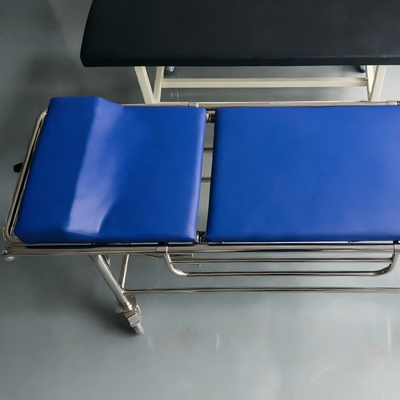
| Brand Name | Jovi |
|---|---|
| Certification | ISO |
| Model Number | 1-cf-30 |
| Document | JVVM-NMT-Series SPE and Quo...on.pdf |
| Minimum Order Quantity | 1 |
| Price | $1000-1500 |
| Packaging Details | Wooden Case |
| Delivery Time | 7 Working Days |
| Payment Terms | T/T |
| Supply Ability | 300 Pcs Per Month |
Product Details
| Caster Rating | IP67 | Radiolucent | Yes |
|---|---|---|---|
| Caster Diameter | 5 Inches | Dimensions | Length: 190 Cm, Width: 55 Cm |
| Size | 1920 X 630 X 720mm | Weight | 8 Kg |
| Highlight | Stretcher Mri,Premium Stretcher Mri,Professional Non-Magnetic Aluminum |
||
Product Description
MRI Stretcher with Patient Warming System
Function
The MRI Stretcher with Patient Warming System is designed to maintain normothermia in patients who are at risk of hypothermia during MRI scanning. MRI suites are often kept cool (18-20°C) for equipment performance, and patients may be exposed for extended periods during long scans. The warming system consists of a heated mattress pad that is integrated into the stretcher deck, powered by a non-magnetic battery pack mounted under the stretcher. The heating elements are made of carbon fiber (non-metallic, non-magnetic) and produce far-infrared heat that warms the patient without electromagnetic interference. The temperature is controlled by a simple mechanical thermostat (no electronics) with three settings: low (32°C), medium (35°C), and high (38°C). The battery pack is hot-swappable, allowing continuous operation during long scans or multiple patient transports.
Application
This stretcher is essential for patients who are vulnerable to hypothermia: neonates, infants, elderly patients, patients with burns or large wounds, patients undergoing prolonged anesthesia, and patients with compromised thermoregulation (e.g., spinal cord injury, stroke). Hypothermia during MRI can lead to shivering (causing motion artifacts), increased metabolic demand, and in severe cases, cardiac complications. The integrated warming system allows the patient to be kept warm from the moment they leave their hospital bed until the scan is complete. The carbon-fiber heating elements are safe for use inside the MRI bore (tested to 3T with no heating of the stretcher itself) and do not produce image artifacts. The system is also useful for post-anesthesia care unit (PACU) to MRI transfers, where patients are often vasodilated and prone to heat loss.
Product Details
Frame:
aluminum alloy 6061
Deck:
carbon-fiber-reinforced polymer, 78 inches x 24 inches
Heated mattress pad:
75 inches x 23 inches x 1.5 inches thick, made of medical-grade polyurethane foam with carbon-fiber heating elements embedded
Mattress cover:
fluid-proof, removable for laundering
Heating elements:
carbon-fiber fabric, resistance 10 ohms per square, powered by 24V DC
Battery pack:
lithium-ion, 24V, 5Ah, mounted in a non-magnetic enclosure under the stretcher, hot-swappable, battery weight 3 lb
Battery runtime:
4 hours on low, 2.5 hours on medium, 1.5 hours on high
Thermostat:
mechanical bimetallic strip (brass and invar – both non-magnetic) with three fixed settings
Temperature accuracy:
±1°C
Overheat protection:
automatic shutoff at 40°C
Charger:
non-magnetic wall-plug type, charges battery in 3 hours
Electrical system:
completely shielded and tested for MRI compatibility (no RF emissions, no magnetic field)
Deck height:
adjustable 22 to 32 inches via non-magnetic hydraulics
Casters:
four 6-inch swivel casters with total-lock brakes
Weight capacity:
400 lb
Weight of stretcher with battery:
88 lb
Includes:
two batteries (one in use, one charging) and a wall-mount charger
Warranty:
Three-year warranty on heating system; one-year warranty on battery
Recommended Products
