


All Products
-
Nuclear Radiation Protection
-
Nuclear Radiation Detector
-
Copper Foil Shielding
-
RF Shielded Doors
-
RF Shielded Windows
-
Radiation Protection Lead Glass
-
Non Magnetic Tool Kit
-
RF Shielded Chamber
-
Honeycomb Waveguide Air Vents
-
Conductive Adhesive Copper Tape
-
Copper Wire Mesh
-
X Ray Lead Glass
-
EMI Shielding Gasket
-
Electrically Conductive Fabric
-
Radiation Protection Door
-
Radiation Protection X Ray
-
Faraday Cage MRI
-
Copper Wire Wool
-
MRI LED Lighting
-
Non Magnetic Wheelchair
-
Non Magnetic Stretcher
-
 AnasBrass honeycomb vent Looks Very Nice
 -
 SatheeshMRI/RF doors are shining with handles, Thank you My friend.
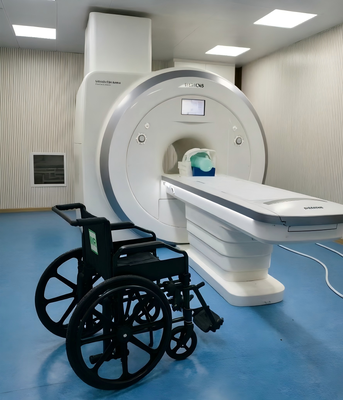
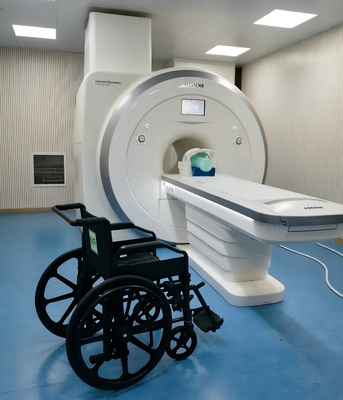
Folded MRI Compatible Wheelchair with 460mm Seat Size and Aluminum Alloy Frame for 3.0T MRI Room

| Brand Name | Jovi |
|---|---|
| Certification | ISO9001 |
| Model Number | 1-cf-009 |
| Document | JVVM-NMT-Series SPE and Quo...on.pdf |
| Minimum Order Quantity | 1set |
| Price | $1200-$1580 |
| Packaging Details | In Wooden Case Or Customized |
| Delivery Time | 5-8 Work Days |
| Payment Terms | T/T |
| Supply Ability | 300 Set / Month |
Product Details
| Seat Size | 460mm | Material | Aluminum Alloy |
|---|---|---|---|
| Net Weight | 17kg | Armrest | Detachable |
| Footrest | Adjustable And Removable | Width | 22 Inches |
| Highlight | Wheeled Wheelchair,Frame Design Foldable,Professional Aluminum Foldable |
||
Product Description
MRI-Guided Intervention Wheelchair
Function
The MRI-Guided Intervention Wheelchair is designed for patients undergoing minimally invasive procedures inside the MRI bore, such as biopsies, injections, or management interventions. Unlike standard wheelchairs that are used only for transport, this wheelchair is intended to be positioned partially inside the MRI scanner during the procedure. The chair has a reduced width (22 inches at the widest point) to fit through a 70-cm bore opening, and the backrest is removable, allowing the patient to be positioned in a semi-recumbent or flat position if needed. The armrests are detachable and can be repositioned to provide access to the intervention site. The chair also includes mounting points for interventional guidance systems (e.g., needle guides or stereotactic frames), which attach via non-magnetic brackets.
Application
This wheelchair is used in interventional MRI suites, where procedures are performed under real-time MRI guidance. Patients undergoing such procedures often have significant or mobility limitations and cannot lie flat on the scanner table. The intervention wheelchair allows them to be positioned in a way that is both comfortable and provides the necessary access for the procedure. For example, a patient with severe back receiving a facet joint injection can sit in the wheelchair, which is then moved into the bore so that the lower back is positioned under the scanner. The backrest is lowered or removed, and the patient leans forward onto a padded support. The physician then performs the injection under MRI guidance. The chair’s non-magnetic construction ensures that it does not interfere with image quality or become a projectile.
Product Details
Frame: carbon-fiber-reinforced polymer for maximum strength with minimal material thickness (to reduce width).
Seat width: 18 inches.
Seat depth: 16 inches.
Backrest: removable via four brass locking pins; when removed, the patient can lie back onto a separate support or recline onto the seat.
Armrests: detachable, with tool-free release; can be repositioned to left, right, or removed entirely.
Width with armrests attached: 22 inches.
Width with armrests removed: 18 inches.
Rear wheels: 20 inches, composite, positioned close to the chair to minimize overall length.
Front casters: 5 inches, swivel with locking brakes (prevents movement during procedure).
Mounting points: four M6 threaded inserts (brass) on each armrest for attaching guidance systems; two mounting points on the backrest frame.
Weight capacity: 350 pounds.
Weight of chair: 35 pounds.
Overall length: 42 inches (short wheelbase for maneuverability).
Includes: a set of disposable drapes that cover the chair while maintaining access to intervention sites.
Warranty: Three-year warranty on frame; one-year warranty on removable components.
Recommended Products
