


All Products
-
Nuclear Radiation Protection
-
Nuclear Radiation Detector
-
Copper Foil Shielding
-
RF Shielded Doors
-
RF Shielded Windows
-
Radiation Protection Lead Glass
-
Non Magnetic Tool Kit
-
RF Shielded Chamber
-
Honeycomb Waveguide Air Vents
-
Conductive Adhesive Copper Tape
-
Copper Wire Mesh
-
X Ray Lead Glass
-
EMI Shielding Gasket
-
Electrically Conductive Fabric
-
Radiation Protection Door
-
Radiation Protection X Ray
-
Faraday Cage MRI
-
Copper Wire Wool
-
MRI LED Lighting
-
Non Magnetic Wheelchair
-
Non Magnetic Stretcher
-
 AnasBrass honeycomb vent Looks Very Nice
 -
 SatheeshMRI/RF doors are shining with handles, Thank you My friend.
Non Magnetic Stretcher with 240 Kg Weight Capacity Non-slip Surface and Non-magnetic Aluminum Alloy for MRI Rooms
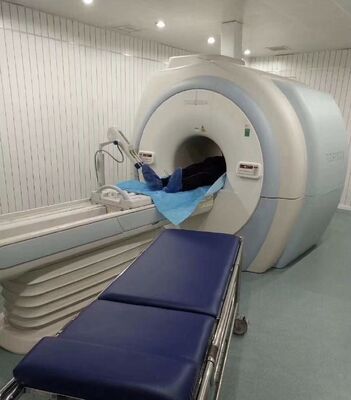

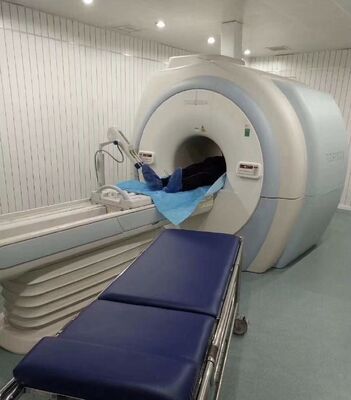
| Brand Name | Jovi |
|---|---|
| Certification | ISO9001 |
| Model Number | 1-cff-09 |
| Document | JVVM-NMT-Series SPE and Quo...on.pdf |
| Minimum Order Quantity | 1set |
| Price | $1200-$1580 |
| Packaging Details | In Wooden Case Or Customized |
| Delivery Time | 5-8 Work Days |
| Payment Terms | T/T |
| Supply Ability | 300 Set / Month |
Product Details
| Max Load | 240 Kg | Material | Non-magnetic Aluminum Alloy |
|---|---|---|---|
| Weight | 8 Kg | Dimensions | 190 Cm X 55 Cm X 20 Cm |
| Caster Diameter | 5 Inches | Deck Size | 78 Inches Long And 24 Inches Wide |
| Highlight | 240Kg Stretcher,Premium Stretcher Mri,Professional Non-Magnetic Aluminum |
||
Product Description
MRI Stretcher with Caster Brake Alarms
The MRI Stretcher with Caster Brake Alarms is designed to prevent one of the most common MRI safety incidents: the patient moving during scanning because the stretcher was not properly locked. Even a small movement of the stretcher during scanning can ruin images, requiring repeat sequences and extending scan time. In interventional procedures, movement can be dangerous. This stretcher provides visual and audible indicators for each caster, ensuring that staff know at a glance whether the brakes are engaged.
Visual Indicators
Each of the four casters has a visual indicator in the form of a red/green flag. When the brake is disengaged, the flag shows green (or sometimes the word “FREE”). When the brake is engaged, the flag flips to red (or the word “LOCK”). The flag is 1 inch tall and 0.5 inches wide, easily visible from standing height. The flag is located on the top of the caster yoke, directly under the stretcher frame. For casters mounted at the corners of the stretcher, the flags are visible from both sides.
Audible Indicators
Each caster also has an audible indicator: a distinct click when the brake is fully engaged. The click is produced by a ceramic detent that snaps into a recess when the brake reaches the locked position. The click is loud enough to be heard in a typical MRI suite (approximately 65 decibels at 3 feet). Staff can be trained to listen for the click as confirmation that the brake is locked. The audible indicator is especially useful in low-light conditions or when the visual flag is obstructed.
Brake Mechanism
The brake mechanism contains only ceramic and plastic parts – no ferrous springs. The ceramic parts are made of zirconia, which is hard, wear-resistant, and completely non-magnetic. The plastic parts are glass-filled nylon. The brake pedal is made of aluminum with a rubber tread. The pedal requires about 15 pounds of force to engage – enough to provide positive feedback without being difficult to operate.
Optional Interlock Interface
All four casters must be locked before the scanner’s “pre-scan ready” light illuminates. This is achieved through an optional interlock interface. The stretcher can be equipped with a sensor on each caster that detects whether the brake is engaged. The sensors are non-magnetic (they use optical detection, not magnetic reed switches). When all four brakes are locked, the sensor sends a signal to a control box mounted on the stretcher. The control box then sends a signal to the MRI scanner’s interlock system, allowing the scan to proceed. If any brake is unlocked, the interlock prevents scanning and an alarm sounds.
The interlock interface is optional and must be specified at the time of order. It requires coordination with the MRI scanner manufacturer, as the interface protocol varies between vendors. The manufacturer provides an interface document that can be shared with the scanner vendor. For facilities that do not need the interlock, the visual and audible indicators alone are sufficient.
Deliberate Brake Release
Brake release requires deliberate pedal pressure on all four corners. Unlike some stretchers where releasing one brake releases all, this stretcher requires each brake to be released individually. This design prevents accidental movement – staff cannot simply kick a single pedal and assume all brakes are off. Instead, they must walk around the stretcher and release each brake in turn. This deliberate process reduces the chance of moving a patient before all brakes are released.
Caster Specifications
The casters themselves are 5 inches in diameter with conductive rubber treads and ceramic bearings. Each caster has a total-lock brake (prevents both swiveling and rolling). The casters are mounted on aluminum yokes with a 360-degree swivel. The swivel bearing is a set of ceramic balls in a nylon race – no metal bearings. The casters have a load rating of 150 pounds each, for a total stretcher capacity of 600 pounds.
Stretcher Deck Specifications
The stretcher deck is 78 inches long and 24 inches wide, with a non-slip textured surface. The deck height is adjustable from 22 to 32 inches using non-magnetic hydraulics. The weight capacity is 450 pounds (the casters can handle more, but the deck and frame are rated for 450). The stretcher weighs 88 pounds.
Clinical Applications
Clinical applications include any MRI facility where patient movement during scanning has been a problem. The visual and audible indicators are particularly useful in busy departments where multiple staff members may be moving stretchers. The interlock interface is recommended for interventional MRI suites where patient movement could have serious consequences. One academic medical center reported that after adopting these stretchers, the number of repeat sequences due to patient movement dropped by 85 percent.
Optional Accessories
Optional accessories include a remote brake status display that mounts on the wall of the MRI control room, showing the brake status of each stretcher in the suite. The remote display uses LEDs (red for unlocked, green for locked) and is powered by a non-magnetic battery pack. A battery charger is included.
Recommended Products
