


All Products
-
Nuclear Radiation Protection
-
Nuclear Radiation Detector
-
Copper Foil Shielding
-
RF Shielded Doors
-
RF Shielded Windows
-
Radiation Protection Lead Glass
-
Non Magnetic Tool Kit
-
RF Shielded Chamber
-
Honeycomb Waveguide Air Vents
-
Conductive Adhesive Copper Tape
-
Copper Wire Mesh
-
X Ray Lead Glass
-
EMI Shielding Gasket
-
Electrically Conductive Fabric
-
Radiation Protection Door
-
Radiation Protection X Ray
-
Faraday Cage MRI
-
Copper Wire Wool
-
MRI LED Lighting
-
Non Magnetic Wheelchair
-
Non Magnetic Stretcher
-
 AnasBrass honeycomb vent Looks Very Nice
 -
 SatheeshMRI/RF doors are shining with handles, Thank you My friend.
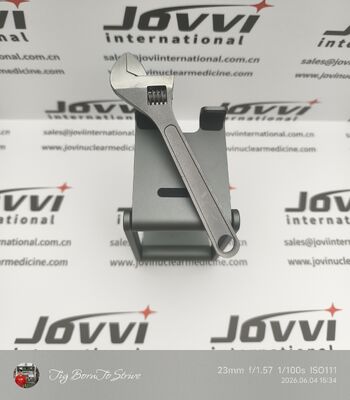
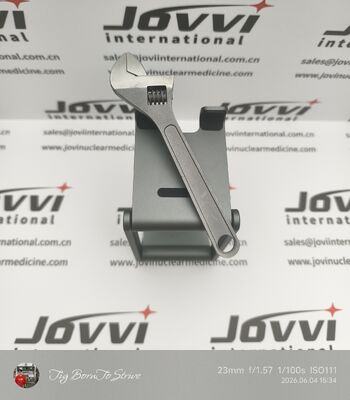
Non Magnetic Tool Kit Made with Titanium Tools for MRI Maintenance and Engineering Applications Requiring Precision

| Brand Name | Jovi |
|---|---|
| Certification | ISO9001 |
| Model Number | 1-cf-7 |
| Document | JVVM-NMT-Series SPE and Quo...on.pdf |
| Minimum Order Quantity | 1set |
| Price | $1580~$4120/set |
| Packaging Details | Carton&wooden Box |
| Delivery Time | 7-14days |
| Payment Terms | T/T |
| Supply Ability | 300 Set / Month |
Product Details
| Material | Titanium (Grade 5, Grade 23), Beryllium Copper | Corrosion Resistance | Excellent (passive Oxide Layer) |
|---|---|---|---|
| Surface Hardness | 36-42 HRC | Magnetic Susceptibility | < 5 × 10⁻⁶ |
| Autoclave Temperature | 121°C Or 134°C | Tool Durability | 10+ Years Under Normal MRI Service Conditions |
| Highlight | Tool Kit Mri,Premium Tool Kit Mri,Professional Non-Magnetic Titanium |
||
Product Description
Jovvi Non-Magnetic Titanium Tool Kit for MRI Engineering –
1. Quality – Why Titanium Tools Require Different Care Than Steel
Titanium has unique material properties that affect maintenance:
| Property | Titanium (Grade 5) | Steel (Tool Steel) | Maintenance Implication |
|---|---|---|---|
| Corrosion resistance | Excellent (passive oxide layer) | Poor (rusts without coating) | Titanium can be autoclaved; steel cannot |
| Galling tendency | High (Ti‑on‑Ti seizes) | Low | Never use titanium tools against titanium fasteners without lubricant |
| Surface hardness | 36–42 HRC | 55–62 HRC | Titanium tips wear faster – inspect regularly |
| Magnetic susceptibility | < 5 × 10⁻⁶ | > 10² | Titanium never needs demagnetization |
Jovvi quality guarantee: Proper maintenance extends tool life to 10+ years under normal MRI service conditions.
2. Application Scenarios – Maintenance Needs by Usage Environment
Scenario A: Zone IV (Inside MRI Scanner Room – High Magnetic Field)
-
Exposure: Occasional contact with patient fluids (saline, blood), contrast media (gadolinium), cleaning agents.
-
Risk: Gadolinium residue (paramagnetic) can contaminate tools, causing artifacts.
-
Maintenance requirement: Clean after every patient contact. Test for paramagnetic contamination monthly.
Jovvi recommendation: Dedicated Zone IV tool kit that never leaves the scanner room – reduces cross‑contamination.
Scenario B: Cryostat Service (Helium Environment)
-
Exposure: Liquid helium temperatures (-269°C) during cryogen work; helium vent gas (inert, no corrosion).
-
Risk: Thermal shock when moving tools from room temperature to cryostat port.
-
Maintenance requirement: Warm tools to room temperature before cleaning. Avoid rapid temperature changes (>10°C per minute).
Jovvi note: Grade 23 titanium retains toughness at cryogenic temperatures – no embrittlement risk.
Scenario C: Workshop Storage (Between Uses)
-
Exposure: Humidity, dust, occasional contact with ferromagnetic particles from other tools.
-
Risk: Cross‑contamination from nearby steel tools (transfer of ferromagnetic dust).
-
Maintenance requirement: Store in closed Jovvi ABS case. Never store on magnetic parts tray.
Jovvi solution: Each kit includes a red‑labeled “MRI SAFE – NON‑MAGNETIC” case with foam inserts that hold tools securely.
3. Tool Variety – Maintenance Schedule by Tool Type
| Tool Type | Inspection Frequency | Cleaning Method | Replacement Indicator |
|---|---|---|---|
| Hex keys (Grade 5 Ti) | Monthly | IPA wipe; ultrasonic if dirty | Worn hex corners (rounded) |
| Screwdrivers (Grade 5 blade) | Weekly (if used daily) | IPA wipe; inspect tip | Tip chipped or twisted |
| Sockets (Grade 5 Ti) | Monthly | Soap + water; dry immediately | Internal hex wallowing (loose fit) |
| Ratchet (Ti + Be‑Cu) | Quarterly | Disassemble, clean gears, re‑grease (Jovvi grease) | Slipping under torque |
| Torque wrench (Grade 23 + Be‑Cu) | Annually (calibration) | Wipe only – no solvent on spring | Calibration out of spec |
| Pliers (Ti jaws + bronze pivot) | Monthly | Lubricate pivot with silicone spray | Jaw misalignment or excessive play |
| Hammer (Ti head) | Quarterly | Inspect face inserts; clean head | Cracks in head (rare) |
| Tweezers (Grade 2 Ti) | As needed | Autoclave (121°C, 20 min) | Bent tips or loss of spring tension |
4. Production Assurance – Cleaning & Sterilization Guidelines
Jovvi titanium tools are autoclavable – a critical advantage over brass or aluminum tools that cannot withstand steam sterilization.
Autoclave Procedure (for tweezers, putty knives, rulers)
| Parameter | Setting |
|---|---|
| Temperature | 121°C (250°F) or 134°C (273°F) |
| Cycle time | 20 minutes (121°C) or 5 minutes (134°C) |
| Drying time | 15 minutes |
| Maximum cycles | Unlimited (no degradation) |
Caution: Do not autoclave tools with moving parts (ratchets, torque wrenches, pliers) – heat can damage lubricants and springs. Use low‑temperature sterilization (hydrogen peroxide plasma) for these tools.
Routine Cleaning (All Tools)
-
After each use: Wipe with 70% isopropyl alcohol wipe. Remove all visible residue.
-
Weekly: Wash with mild soap and warm water using a soft brush. Rinse with deionized water. Dry completely with lint‑free cloth.
-
Monthly: Inspect for galling (titanium‑on‑titanium cold welding). If present, apply Jovvi anti‑galling paste (boron nitride based) to mating surfaces.
-
Quarterly: Ultrasonic cleaning (5 minutes in deionized water with mild detergent) – removes embedded particles from textured surfaces.
What NOT to Use on Titanium Tools
| Prohibited Substance | Reason |
|---|---|
| Chlorinated solvents ( methylene chloride) | Can attack some handle materials (plastics, grips) |
| Abrasive powders (pumice, sand) | Scrubs off passive oxide layer, promotes galling |
| Acidic cleaners (phosphoric, hydrochloric) | Etches titanium surface, reduces fatigue life |
| Steel wool or wire brushes | Leaves ferromagnetic particles embedded |
5. Preventing and Managing Titanium Galling
Galling is a form of adhesive wear where titanium cold‑welds to itself under pressure. This is the most common failure mode for titanium fasteners and tools.
Symptoms of Galling
-
Hex key feels “sticky” when removing from screw
-
Screw head hex recess becomes rounded or torn
-
Metallic debris (titanium flakes) visible on tool
Prevention
| Application | Prevention Method |
|---|---|
| Titanium hex key into titanium screw | Use anti‑galling paste (Jovvi P/N JG‑100) – apply every 10 insertions |
| Titanium socket onto titanium nut | Nickel‑based anti‑seize (not containing molybdenum – that is ferromagnetic) |
| Titanium screwdriver into titanium fastener | Reduce insertion force – do not hammer seated |
| Any Ti‑on‑Ti threaded interface | Use brass or bronze insert as sacrificial interface |
Recommended Products
