


All Products
-
Nuclear Radiation Protection
-
Nuclear Radiation Detector
-
Copper Foil Shielding
-
RF Shielded Doors
-
RF Shielded Windows
-
Radiation Protection Lead Glass
-
Non Magnetic Tool Kit
-
RF Shielded Chamber
-
Honeycomb Waveguide Air Vents
-
Conductive Adhesive Copper Tape
-
Copper Wire Mesh
-
X Ray Lead Glass
-
EMI Shielding Gasket
-
Electrically Conductive Fabric
-
Radiation Protection Door
-
Radiation Protection X Ray
-
Faraday Cage MRI
-
Copper Wire Wool
-
MRI LED Lighting
-
Non Magnetic Wheelchair
-
Non Magnetic Stretcher
-
 AnasBrass honeycomb vent Looks Very Nice
 -
 SatheeshMRI/RF doors are shining with handles, Thank you My friend.
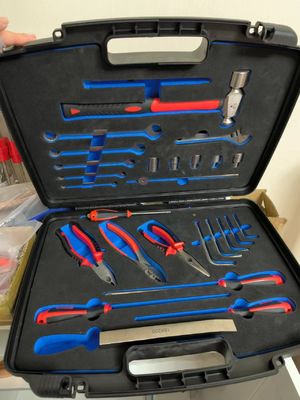
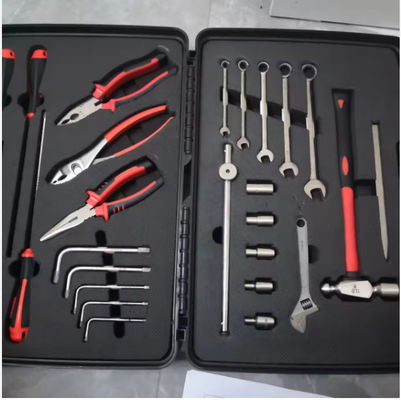
MRI safe Non Magnetic Tool Kit crafted with 90 percent titanium for engineering professionals needing non magnetic tools


| Brand Name | Jovi |
|---|---|
| Certification | ISO |
| Model Number | 1-cf-7 |
| Document | JVVM-NMT-Series SPE and Quo...on.pdf |
| Minimum Order Quantity | 1set |
| Price | $1680~2680 |
| Packaging Details | Carton&wooden Box |
| Delivery Time | 14~30days |
| Payment Terms | T/T |
| Supply Ability | 300 Set / Month |
Product Details
| Material Composition | 90% Titanium Alloy (Grade 5/Ti-6Al-4V) | Magnetic Susceptibility | < 5 × 10⁻⁶ SI Units |
|---|---|---|---|
| Tool Weight | 45% Of Equivalent Steel Tools | Size Options | 6", 8" Or Customized |
| Torque Range | 1-10 N*m (adjustable) | Case Material | Hard Plastic (non-magnetic ABS) |
| Highlight | Tool Kit Mri,Premium Tool Kit Mri,Professional Non-Magnetic Titanium |
||
Product Description
Jovvi Non-Magnetic Titanium Tool Kit for MRI Engineering – Version 1 (Comprehensive Overview)
Product Identity – 90% Titanium, 100% MRI-Safe
Jovvi Non‑Magnetic Titanium Tool Kits are purpose‑built for MRI engineering, servicing, and construction environments where ferromagnetic tools are strictly prohibited. Each kit contains tools fabricated from ≥90% titanium (Grade 5 / Ti‑6Al‑4V) , with remaining non‑ferromagnetic components (brass, beryllium copper, or 300 series stainless steel). No ferrous metals (iron, nickel, cobalt) are present, ensuring absolute safety within the MRI magnetic field (up to 7 Tesla).
Key quality guarantees:
- Magnetic susceptibility < 5 × 10⁻⁶ (SI units) – fully MR Conditional/ Safe
- Non‑sparking – safe for use in oxygen‑rich MRI suite environments
- Corrosion resistance – unaffected by cleaning agents, saline, or contrast media spills
- High strength‑to‑weight ratio – titanium tools weigh approximately 45% of equivalent steel tools
Application Scenarios – Where Jovvi Titanium Tools Are Required
MRI engineering spans four distinct environments, each requiring non‑magnetic tools:
1. MRI Scanner Room (Zone IV – The Magnetic Field Area)
- Activities: Routine maintenance, coil connection/disconnection, patient table repair, RF shield inspection.
- Risks of ferrous tools: Wrenches or screwdrivers become projectiles, damaging the scanner bore or injuring patients/staff. Even small ferrous particles can cause image artifacts.
- Jovvi applications: Hex keys for magnet cover panels, torque wrenches for gradient coil fasteners, non‑magnetic flashlights.
2. MRI Suite Construction & Installation
- Activities: Installing RF shielding copper mesh, assembling patient table rails, mounting wall plates.
- Risk: Conventional steel tools left behind inside shielded enclosure cause image artifacts for years.
- Jovvi applications: Titanium hammers (for shield fasteners), non‑magnetic levels, titanium drill bits (for pre‑drilling into non‑ferrous anchors).
3. Cryogen & Helium Servicing
- Activities: Accessing cryostat ports, checking helium level sensors, vent line maintenance.
- Risk: Any ferromagnetic particle entering the cryostat can cause quench (loss of superconductivity) – a $50,000–$200,000 event.
- Jovvi applications: 90% titanium socket sets, non‑magnetic pick‑up tools (for retrieving dropped items), titanium tweezers.
4. Biomedical Engineering Workshops (Off‑Site Tool Preparation)
- Activities: Repairing RF coils, testing patient monitoring devices, calibrating MRI‑compatible equipment.
- Risk: Tools used in the workshop may accidentally be brought into Zone IV with residual ferromagnetic contamination.
- Jovvi solution: Complete titanium kits that never become magnetized, eliminating cross‑contamination risk.
Tool Variety – Complete Kit Composition (≥90% Titanium)
Jovvi offers three standard kit configurations, plus custom assembly.
Jovvi ProKit-1 (Essential – 18 tools, ≥90% Ti)
| Tool Type | Quantity | Titanium Content | Function |
|---|---|---|---|
| Hex key set (metric) | 9 pcs (1.5–10 mm) | 100% Ti | Screws on magnet covers |
| Torx drivers | 5 pcs (T6–T30) | 100% Ti | RF coil fasteners |
| Flathead screwdriver | 1 | 90% Ti (blade), brass handle | General service |
| Phillips screwdriver | 1 | 90% Ti (blade), brass handle | Patient table assembly |
| Non‑magnetic tweezers | 1 | 100% Ti | Retrieving small parts |
| Titanium ruler (150 mm) | 1 | 100% Ti | Gap measurement |
Jovvi ProKit-2 (Advanced – 32 tools, ≥90% Ti)
Adds to ProKit-1:
- Socket set (8 pcs, 6–19 mm) – 100% Ti
- Ratchet handle (1/4″ drive) – titanium body, brass gears
- Torque wrench (adjustable 1–10 N·m) – 90% Ti, beryllium copper spring
- Pliers (needle nose & diagonal cutters) – 90% Ti jaws, bronze pivot
- Non‑magnetic hammer (200 g head) – 100% Ti head, fiberglass handle
- Magnetic field indicator card – not a tool, but included to verify ferrous contamination
Jovvi ProKit-3 (Specialty – 45 tools, for cryogen/helium service)
Adds to ProKit-2:
- Deep socket set (for cryostat port nuts)
- Titanium crowbar (300 mm) – for separating RF shield panels
- Non‑magnetic inspection mirror (titanium stem, acrylic mirror)
- Titanium putty knife – for removing old conductive paste
- Beryllium copper wrench set (for oxygen service where titanium-on-titanium galling is a concern)
Titanium Content Verification
Every tool is laser‑etched with “Ti ≥90%” and a serial number. Jovvi provides a material certificate for each kit, listing:
- Exact titanium alloy grade (typically Ti‑6Al‑4V ELI for extra low interstitials)
- Magnetic susceptibility test result (< 5 × 10⁻⁶)
- Individual tool weight (for customs declaration – titanium is a controlled export material in some countries)
Production Assurance – MRI‑Specific Quality Control
Jovvi operates under ISO 13485:2016 (medical device tooling) and follows ASTM F3042 (standard specification for non‑magnetic tools used in MRI environments).
Manufacturing Process (Ensuring ≥90% Ti)
- Raw material sourcing – Certified Ti‑6Al‑4V bar stock. Each batch has mill test report (MTR) confirming no ferrous inclusion >0.01% by weight.
- CNC machining – Tools are machined, not forged, to maintain uniform titanium content. Cutting tools are carbide (non‑contaminating).
- Non‑ferrous assembly – Spring mechanisms use beryllium copper (Cu‑Be). Pivot pins use bronze or titanium. No nickel plating.
- 100% ferromagnetic testing – Every tool passes through a 3‑Tesla MRI bore with a ferromagnetic artifact test. Any tool causing measurable field distortion (>1 ppm at 10 cm) is rejected.
- Final cleaning – Ultrasonic cleaning in non‑ionic detergent, followed by deionized water rinse. No ferromagnetic residue allowed.
Packaging & Documentation
- Storage case: ESD‑safe, foam‑lined, non‑magnetic ABS plastic (no steel hinges or latches – uses brass or plastic clasps).
- Labeling: Red “NON‑MAGNETIC – MRI SAFE” labels on case and each tool.
- Included documents:
- Certificate of Conformance (ISO 13485)
- Magnetic susceptibility test report (per tool type)
- Instructions for use (cleaning, inspection, replacement intervals)
Warranty & Support
- Material warranty: 5 years against titanium alloy defects (cracking, excessive wear).
- Magnetic safety guarantee: Lifetime guarantee that tools will remain non‑magnetic under normal use (excluding intentional exposure to >10 T fields).
- Re‑certification service: Jovvi offers annual ferromagnetic testing for $50/kit (excluding shipping).
Why ≥90% Titanium? – Performance & Safety Balance
| Material | Magnetic Susceptibility | Strength | Weight | Cost | Use in Jovvi Kit |
|---|---|---|---|---|---|
| Titanium (Grade 5) | < 5 × 10⁻⁶ | High | Low | Medium | ≥90% of kit |
| Brass | ~0 | Low | Medium | Low | Small parts (handles, gears) |
| Beryllium Copper | < 1 × 10⁻⁵ | Medium | Medium | High | Springs, wrenches |
| 300 Series Stainless (non‑magnetic) | ~10⁻³ | High | High | Low | NOT used – still causes minor artifacts |
Jovvi chooses ≥90% titanium because:
- Lower magnetic susceptibility than 316 stainless (100x less artifact‑prone)
- Higher strength than brass (critical for torque tools and pry bars)
- Lightweight – reduces user fatigue during long MRI service sessions (typically 2–4 hours inside Zone IV)
Recommended Products
