


All Products
-
Nuclear Radiation Protection
-
Nuclear Radiation Detector
-
Copper Foil Shielding
-
RF Shielded Doors
-
RF Shielded Windows
-
Radiation Protection Lead Glass
-
Non Magnetic Tool Kit
-
RF Shielded Chamber
-
Honeycomb Waveguide Air Vents
-
Conductive Adhesive Copper Tape
-
Copper Wire Mesh
-
X Ray Lead Glass
-
EMI Shielding Gasket
-
Electrically Conductive Fabric
-
Radiation Protection Door
-
Radiation Protection X Ray
-
Faraday Cage MRI
-
Copper Wire Wool
-
MRI LED Lighting
-
Non Magnetic Wheelchair
-
Non Magnetic Stretcher
-
 AnasBrass honeycomb vent Looks Very Nice
 -
 SatheeshMRI/RF doors are shining with handles, Thank you My friend.
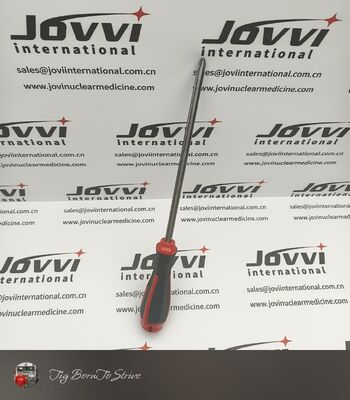
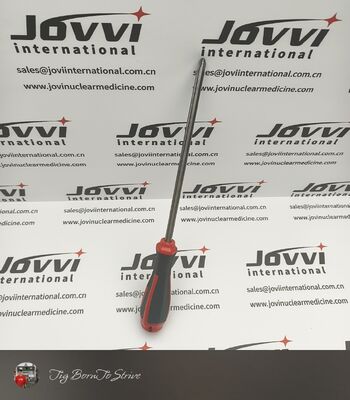
Professional Grade 5 Titanium Non Magnetic Tool Kit with ESD Safe and Corrosion Resistant Hex Key Set

| Brand Name | Jovi |
|---|---|
| Certification | ISO |
| Model Number | 1-cf-7 |
| Document | JVVM-NMT-Series SPE and Quo...on.pdf |
| Minimum Order Quantity | 1set |
| Price | $2580 |
| Packaging Details | Carton&wooden Box |
| Delivery Time | 7-14days |
| Payment Terms | T/T |
| Supply Ability | 300 Set / Month |
Product Details
| Wire Diameter | 12 Mm | Tolerance | ±0.02 Mm |
|---|---|---|---|
| Bend Radius | 4× Wire Diameter | Ball End Radius | 1.5× Across-flats |
| Drive End Size | 6.35 Mm ±0.02 Mm | Coating Thickness | 20-50 μm |
| Highlight | Esd Safe Tool Kit,Corrosion Resistant Titanium,Professional Non-Magnetic Titanium |
||
Product Description
Raw Material: Drawn Titanium Wire
Hex keys begin as drawn titanium wire – Grade 5 Ti that has been pulled through hexagonal dies.
Wire drawing process:
-
Titanium rod (12 mm diameter) heated to 700°C
-
Pulled through first hexagonal die (reduction 20%)
-
Annealed (700°C, 1 hour) to relieve stress
-
Pulled through second die (smaller hex)
-
Repeated until final size reached (e.g., 3 mm across flats)
Result: Hexagonal cross‑section with precise dimensions and smooth surface (no machining marks).
Quality check: Laser micrometer measures across‑flats every 10 meters. Tolerance: ±0.02 mm.
L‑Style Hex Key Manufacturing
| Step | Process | Key Parameter |
|---|---|---|
| 1 | Cut drawn wire to length (200–300 mm) | Length tolerance ±0.5 mm |
| 2 | Bend 90° (short arm) on CNC bender | Bend radius 4× wire diameter |
| 3 | Heat treat (age hardening) – already done on wire? | Wire pre‑aged; no additional heat treat |
| 4 | Grind ball end (optional) | Spherical radius = 1.5× across‑flats |
| 5 | Bead blast (matte finish) | Glass beads, 60 psi |
| 6 | Laser mark | Size + “Ti ≥90%” + batch number |
Ball end grinding:
-
Fixture rotates hex key while grinding wheel moves in arc
-
Result: Smooth sphere on long arm tip
-
Inspection: Optical comparator – ball end must not have flat spots
Critical dimension: Short arm length (varies by size)
| Size (mm) | Short arm length (Jovvi) | Application |
|---|---|---|
| 1.5 | 15 mm | Tight RF coil access |
| 2.0 | 18 mm | Standard |
| 2.5 | 20 mm | Standard |
| 3.0 | 25 mm | Standard |
| 4.0 | 28 mm | General |
| 5.0 | 32 mm | General |
| 6.0 | 36 mm | High torque |
| 8.0 | 45 mm | Large fasteners |
| 10.0 | 55 mm | Cryostat external |
T‑Handle Hex Key Manufacturing
T‑handles provide better ergonomics and higher torque capability.
Construction:
-
Hex shaft: Same drawn wire as L‑style, cut to 150–200 mm length
-
Handle: Brass (cast) or aluminum (machined) – both non‑magnetic
-
Assembly: Shaft pressed into handle with epoxy (MRI‑safe)
-
Tang option: Shaft extends through handle (visible at top) – confirms no steel core
Torque advantage: T‑handle allows 20–30% higher torque than L‑style before hand fatigue.
Sizes: 2 mm, 2.5 mm, 3 mm, 4 mm, 5 mm, 6 mm (handles color‑coded by size).
Micro Hex Keys (0.7–1.3 mm)
For animal MRI (7T, 9.4T) and small device repair, standard hex keys are too large.
Manufacturing challenges:
-
Drawn wire below 1 mm is difficult (breaks during drawing)
-
Jovvi uses centerless grinding of titanium rod to hexagonal cross‑section (not drawn)
-
Process: Rod rotated while grinding wheel forms hex shape
-
Tolerance: ±0.01 mm (critical for 0.7 mm size)
Inspection: 100% optical measurement (microscope with digital scale). Reject any with corner radius >0.02 mm.
Set: 0.7 mm, 0.9 mm, 1.3 mm (stored in foam case with size labels).
Hex Bit (1/4″ Drive) Manufacturing
For use with ratchet or torque wrench:
| Step | Process |
|---|---|
| 1 | Machine hex tip (same as L‑style end) on CNC lathe |
| 2 | Machine 1/4″ hex drive end (opposite side) |
| 3 | Heat treat (age harden) |
| 4 | Bead blast |
| 5 | Laser mark size + “Ti” |
Drive end tolerance: 6.35 mm ±0.02 mm across flats (fits standard 1/4″ drivers).
Torque Testing (Destructive – Sample from Each Batch)
| Size (mm) | Torque to failure (N·m) – Jovvi Ti | Failure mode |
|---|---|---|
| 1.5 | 2.5 | Torsional fracture at bend |
| 2.0 | 5.0 | Torsional fracture at bend |
| 2.5 | 8.0 | Torsional fracture at bend |
| 3.0 | 12.0 | Torsional fracture at bend |
| 4.0 | 20.0 | Torsional fracture at bend |
| 5.0 | 30.0 | Twisting (plastic deformation) |
| 6.0 | 40.0 | Twisting (plastic deformation) |
Acceptance criterion: Failure torque must exceed 2× recommended max torque (from Version 6 table). Jovvi exceeds this standard.
Anti‑Galling Surface Treatment (Optional)
For customers using titanium hex keys with titanium screws (e.g., custom MRI coils), Jovvi offers a plasma electrolytic oxidation (PEO) coating.
PEO process:
-
Hex key immersed in electrolyte (phosphate-based)
-
High voltage (500–800 V) applied – plasma discharges form ceramic oxide layer
-
Resulting coating: TiO₂ (rutile) – thickness 20–50 μm
-
Benefit: Reduces coefficient of friction (Ti‑on‑Ti) from 0.8 to 0.3
Order code: Add “‑PEO” to hex key part number (e.g., JOHL‑9‑PEO). Lead time +5 days.
Recommended Products
