


All Products
-
Nuclear Radiation Protection
-
Nuclear Radiation Detector
-
Copper Foil Shielding
-
RF Shielded Doors
-
RF Shielded Windows
-
Radiation Protection Lead Glass
-
Non Magnetic Tool Kit
-
RF Shielded Chamber
-
Honeycomb Waveguide Air Vents
-
Conductive Adhesive Copper Tape
-
Copper Wire Mesh
-
X Ray Lead Glass
-
EMI Shielding Gasket
-
Electrically Conductive Fabric
-
Radiation Protection Door
-
Radiation Protection X Ray
-
Faraday Cage MRI
-
Copper Wire Wool
-
MRI LED Lighting
-
Non Magnetic Wheelchair
-
Non Magnetic Stretcher
-
 AnasBrass honeycomb vent Looks Very Nice
 -
 SatheeshMRI/RF doors are shining with handles, Thank you My friend.
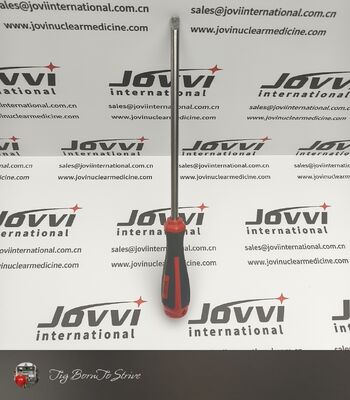
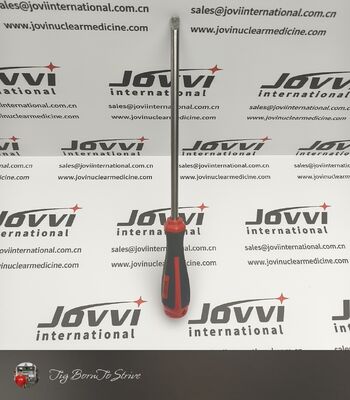
Easy Maintenance Non Magnetic Tool Kit with Anti-slip Rubber Handle and Corrosion Resistant Durability

| Brand Name | Jovi |
|---|---|
| Certification | ISO |
| Model Number | 1-cf-7 |
| Document | JVVM-NMT-Series SPE and Quo...on.pdf |
| Minimum Order Quantity | 1set |
| Price | $2580 |
| Packaging Details | Carton&wooden Box |
| Delivery Time | 7-14days |
| Payment Terms | T/T |
| Supply Ability | 300 Set / Month |
Product Details
| Hardness | 38-42 HRC | Service Life | 20,000+ Uses |
|---|---|---|---|
| Ball End Option | Yes | Max Torque | 1.0-40.0 N*m |
| Handle Material | Anti-slip Rubber | Case Color | Black |
| Highlight | Ergonomic Handle Tool Kit,Corrosion Resistant Non-Magnetic,Professional Tool Kit Non-Magnetic |
||
Product Description
Why Hex Keys Are the MRI Engineer’s #1 Tool
Count the hex socket screws on an MRI scanner:
-
Magnet cover panels: 20–30 screws
-
RF coil housings: 10–15 screws
-
Gradient coil covers: 15–20 screws
-
Patient table rails: 8–12 screws
-
Accessory mounts: 5–10 screws
Total: 60–90 hex screws per scanner. Each requires a hex key. If your hex key fails (strips, breaks, or becomes magnetic), you cannot service the scanner.
Jovvi Titanium Hex Key Lineup
| Type | Sizes | Best For | Sales Message |
|---|---|---|---|
| L-style (standard) | 1.5–10 mm | General service | “The workhorse – ball end allows 25° angled entry” |
| L-style (short arm) | 1.5–6 mm | Tight spaces | “Fits inside RF coil housings where others won’t reach” |
| T-handle | 2–6 mm | High torque | “Ergonomic grip – reduces hand fatigue during 50+ screw days” |
| Hex bits (1/4″ drive) | 2–6 mm | Ratchet or torque wrench | “Precise torque control for cryostat fasteners” |
| Extra-long (200 mm shaft) | 2–4 mm | Deep recessed screws | “Reaches screws buried 150 mm inside gradient assembly” |
| Micro | 0.7–1.3 mm | Animal MRI, small devices | “Essential for 7T animal coils – no alternative exists” |
The Brass Hex Key Problem
Brass hex keys are cheap ($2–5 each) but fail quickly:
| Use Count | Brass Hex Key Condition | Consequence |
|---|---|---|
| 0–10 uses | New – works fine | None |
| 10–30 uses | Corners begin rounding | Slight play in screw head |
| 30–50 uses | Significant rounding | Risk of stripping screw head |
| 50+ uses | Unusable – slips in every screw | Engineer frustrated; stripped screw extraction required |
Cost of one stripped screw: $5,000 in parts (replace RF coil), 2 hours labor, 1 hour scanner downtime → $6,500+. A $5 brass hex key just caused $6,500 in damage.
The Stainless Hex Key Problem
Stainless steel hex keys (316, 304) are harder (55 HRC) and last longer, but:
-
Become magnetic – Cold working from repeated insertion/stress causes martensitic transformation. A “non‑magnetic” stainless hex key after 6 months may attract to a 3T magnet.
-
Create artifacts – Even weakly magnetic tools cause image distortion.
-
Ferromagnetic fragments – If a stainless hex key breaks (possible under high torque), fragments are ferromagnetic and can damage cryostat.
Jovvi Titanium Hex Key Advantages
| Parameter | Jovvi Ti | Brass | 316 Stainless |
|---|---|---|---|
| Hardness (HRC) | 38–42 | 20–25 | 55–60 (but work hardens) |
| Service life (uses) | 20,000+ | <50 | 5,000+ (but becomes magnetic) |
| Magnetic after 1 year? | No | No | Yes (often) |
| Ball end option | Yes | Yes (but wears fast) | Yes |
| Cost per hex key (3 mm) | $15 | $3 | $8 |
| 5‑year cost (replacements) | $15 (one key) | $3 × 20 replacements = $60 | $8 × 2 replacements = $16 (plus artifact costs) |
Sales close: “The $15 Jovvi titanium hex key outlasts twenty $3 brass hex keys – and never causes artifacts. Which is really cheaper?”
Torque Limits for Titanium Hex Keys
| Size (mm) | Recommended Max Torque (N·m) | Application |
|---|---|---|
| 1.5 | 1.0 | Small set screws |
| 2.0 | 2.0 | RF coil fasteners |
| 2.5 | 3.5 | Magnet cover panels |
| 3.0 | 6.0 | General service |
| 4.0 | 10.0 | Gradient assembly |
| 5.0 | 15.0 | Patient table rails |
| 6.0 | 20.0 | Large mounting bolts |
| 8.0 | 30.0 | Cryostat external nuts |
| 10.0 | 40.0 | Heavy equipment anchors |
Warning to customer: “Exceeding these torques with the ball end? You will strip the screw head. Use the straight end for final tightening.”
Recommended Products
