


All Products
-
Nuclear Radiation Protection
-
Nuclear Radiation Detector
-
Copper Foil Shielding
-
RF Shielded Doors
-
RF Shielded Windows
-
Radiation Protection Lead Glass
-
Non Magnetic Tool Kit
-
RF Shielded Chamber
-
Honeycomb Waveguide Air Vents
-
Conductive Adhesive Copper Tape
-
Copper Wire Mesh
-
X Ray Lead Glass
-
EMI Shielding Gasket
-
Electrically Conductive Fabric
-
Radiation Protection Door
-
Radiation Protection X Ray
-
Faraday Cage MRI
-
Copper Wire Wool
-
MRI LED Lighting
-
Non Magnetic Wheelchair
-
Non Magnetic Stretcher
-
 AnasBrass honeycomb vent Looks Very Nice
 -
 SatheeshMRI/RF doors are shining with handles, Thank you My friend.
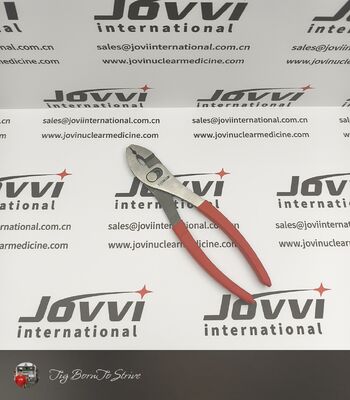
Hard Plastic Case Non Ferrous Tool Kit with Customized Logo and ESD Safe for Manufacturing Workflow


| Brand Name | Jovi |
|---|---|
| Certification | ISO |
| Model Number | 1-cf-7 |
| Document | JVVM-NMT-Series SPE and Quo...on.pdf |
| Minimum Order Quantity | 1set |
| Price | $2580 |
| Packaging Details | Carton&wooden Box |
| Delivery Time | 7-14days |
| Payment Terms | T/T |
| Supply Ability | 300 Set / Month |
Product Details
| Blade Material | Grade 5 Ti (Ti‑6Al‑4V) | Tip Corner Radius | <0.03 Mm |
|---|---|---|---|
| Handle Knurling Depth | 0.3-0.5 Mm | Dielectric Test | 1000 V |
| Tip Hardness | 38-42 HRC | Insulation Thickness | 2 Mm |
| Highlight | Esd Safe Tool Kit,Premium Tool Kit,Professional Tool Kit |
||
Product Description
Screwdriver Components & Materials
| Component | Material | Manufacturing Method | Quality Requirement |
|---|---|---|---|
| Blade | Grade 5 Ti (Ti‑6Al‑4V) | Swiss‑type CNC lathe + grinding | Concentricity <0.05 mm |
| Tip | Grade 5 Ti (same as blade) | Precision grinding (optical control) | Corner radius <0.03 mm (Phillips) |
| Handle (standard) | Brass (C36000) | Cast + CNC machined | Knurling depth 0.3–0.5 mm |
| Handle (insulated) | Brass core + rubber overmold | Injection molded (non‑magnetic rubber) | Dielectric test 1000 V |
| Tang | Grade 5 Ti (blade extension) | Integral (same piece as blade) | Full length through handle |
Tip Grinding – The Critical Process
Screwdriver tip geometry determines cam‑out resistance (slipping out of fastener). Jovvi uses CNC optical grinding with in-process vision inspection.
Phillips tip:
Cross recess grinding: 4 flutes, 90° included angle
Tip point: Conical with 0.2–0.3 mm flat (prevents bottoming out)
Corner radius: <0.03 mm (sharp edges grip fastener)
Inspection: 50× optical comparator – overlay with master profile
Torx tip:
6-lobe star pattern ground in one operation (indexed spindle)
Tolerances: Across-points (e.g., T20 = 3.86–3.94 mm)
No coating – bare titanium provides sufficient wear resistance
Flathead tip:
Parallel ground faces (taper <0.02 mm over 10 mm length)
Tip thickness: 80% of slot width (prevents spreading slot)
Tang-Through Construction – The Jovvi Advantage
Many “titanium” screwdrivers use a titanium-coated steel blade or a short titanium tip welded to steel shank. Jovvi uses solid Grade 5 Ti blade extending full handle length.
Verification method:
Handle has inspection hole (2 mm diameter) at base
Titanium blade visible through hole
Magnet test: No attraction (steel core would attract)
Benefit: No hidden ferromagnetic components. Full torque transmission without handle separation.
Handle Materials & MRI Compatibility
| Handle Type | Material | Magnetic Susceptibility | Pros | Cons |
|---|---|---|---|---|
| Standard (knurled) | Brass (C36000) | ~0 (diamagnetic) | Non-sparking, durable, machinable | Heavier than plastic |
| Insulated | Brass + rubber overmold | ~0 + rubber (diamagnetic) | Electrical safety (1000 V) | Bulkier |
| Precision (small) | Anodized aluminum | ~2 × 10⁻⁵ | Lightweight, low cost | Less durable for heavy torque |
Jovvi uses brass for standard handles because it is non-magnetic, non-sparking, and provides sufficient mass for torque control.
Tip Hardness & Wear Testing
| Test | Method | Pass Criterion |
|---|---|---|
| Initial hardness | Rockwell (HRC) on tip | 38–42 HRC |
| Wear test | Drive 500 screws into Ti test block (3 N·m torque) | Tip geometry change <0.05 mm |
| Cam-out test | Apply 10 N axial force, rotate at 5 N·m torque | No visible slippage after 100 cycles |
Failure mode: Tip corners round (Phillips) or points wear (Torx). Jovvi screwdrivers typically last 5,000–10,000 cycles – far exceeding brass (<500) or ceramic (<2,000).
Insulated Screwdriver Manufacturing
For live electrical work inside MRI console (e.g., 120 VAC, 24 VDC), Jovvi offers insulated screwdrivers.
Construction:
Brass handle with integral blade tang (same as standard)
Rubber overmold (Viton® or EPDM) – injection molded at 180°C
Insulation thickness: 2 mm minimum (1000 V rating per IEC 60900)
Dielectric test: 10,000 V for 3 minutes (pass if no breakdown)
Note: Insulation is non‑magnetic (rubber contains no ferromagnetic fillers). Use for magnet room electrical panels outside 0.5 m fringe field.
Recommended Products
