


All Products
-
Nuclear Radiation Protection
-
Nuclear Radiation Detector
-
Copper Foil Shielding
-
RF Shielded Doors
-
RF Shielded Windows
-
Radiation Protection Lead Glass
-
Non Magnetic Tool Kit
-
RF Shielded Chamber
-
Honeycomb Waveguide Air Vents
-
Conductive Adhesive Copper Tape
-
Copper Wire Mesh
-
X Ray Lead Glass
-
EMI Shielding Gasket
-
Electrically Conductive Fabric
-
Radiation Protection Door
-
Radiation Protection X Ray
-
Faraday Cage MRI
-
Copper Wire Wool
-
MRI LED Lighting
-
Non Magnetic Wheelchair
-
Non Magnetic Stretcher
-
 AnasBrass honeycomb vent Looks Very Nice
 -
 SatheeshMRI/RF doors are shining with handles, Thank you My friend.
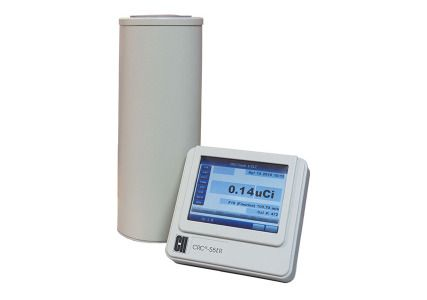
Dose Calibrator X Ray Gamma Line For Nuclear Radiation Detector
Product Details
| Operatingtemperature | -20°C To 50°C | Battery Life | 20 Days |
|---|---|---|---|
| Language | Chinese And English | Current | 3A |
| Type | Handheld | Energy Response | 40KeV-1.5MeV |
| Detection Range | 0.01-1000 MSv/h | Size | 120*65*25mm |
| Highlight | large touch screen digital kiosk,600W touch screen digital kiosk,Digital Kiosks Public Information Systems |
||
Product Description
Of course. Here is a comprehensive introduction to a **dose calibrator**, a critical instrument in nuclear medicine.
### What is a Dose Calibrator?
A **dose calibrator** is a specialized, pressurized ionization chamber used in nuclear medicine departments to **accurately measure the activity (or "strength") of radioactive pharmaceuticals** before they are administered to patients. It is not an imaging device; it is a safety and quality control device essential for ensuring each patient receives the correct prescribed amount of radioactivity.
Its primary function is to determine the number of **megabecquerels (MBq)** or **millicuries (mCi)** in a syringe, vial, or other container holding a radiopharmaceutical.
---
### Key Principles of Operation
1. **Ionization Chamber:** The heart of the device is a sealed, gas-filled chamber. When gamma rays (and high-energy beta particles) from the radioactive source penetrate the chamber, they ionize the gas, creating positive ions and free electrons.
2. **Current Measurement:** An applied voltage collects these ions, generating a very small electrical current. This current is **proportional to the radiation emission rate**, and thus, the activity of the source.
3. **Pressurized Gas:** The chamber is filled with an inert gas (like argon) under high pressure (typically 10-25 atmospheres). This increases the density of the gas, allowing it to efficiently stop more gamma photons and produce a stronger, more measurable signal, especially for common medical radionuclides like Tc-99m.
---
### Essential Features and Components
* **Heavy Lead Shielding:** Encases the chamber to protect the user and minimize background radiation interference.
* **Well-Type Geometry:** A cylindrical cavity ("well") that holds the radioactive sample. This geometry surrounds the source for highly efficient detection (close to 4π).
* **Selector Knob/Display:** Allows the operator to choose the specific **radionuclide** being measured (e.g., Tc-99m, I-131, F-18). The calibrator uses pre-programmed calibration factors for each nuclide to convert the measured current into an activity reading.
* **Readout:** Digital display showing activity in MBq, mCi, or other units.
* **Zero/Background Check:** A function to measure and subtract ambient background radiation.
* **Constancy, Linearity, and Accuracy Test Tools:** Built-in features or required accessories for daily quality control.
---
### The "Assay" Process (How it's Used)
1. The radiopharmaceutical is drawn into a syringe and placed in a shielded syringe holder.
2. The syringe is lowered into the well of the dose calibrator.
3. The technologist selects the correct radionuclide on the control panel.
4. The instrument instantly displays the total activity and the measurement time.
5. This measured value is compared to the prescribed dose to verify it is within acceptable limits before patient administration.
---
### The Four Pillars of Quality Control (**Mandatory**)
To ensure accuracy and patient safety, strict daily, weekly, and quarterly QC tests are performed:
1. **Constancy (Daily):**
* **Purpose:** To verify the calibrator's response is stable over time using a long-lived reference source (e.g., Cesium-137, Cobalt-57).
* **Method:** Measure the reference source daily. The reading must be within a defined tolerance (typically ±5%) of its expected value.
2. **Linearity (Quarterly & After Servicing):**
* **Purpose:** To confirm the calibrator accurately measures activity over its entire useful range, especially as radioactivity decays.
* **Method:** Measure a high-activity sample of a short-lived nuclide (often Tc-99m) repeatedly over several half-lives (usually 2-3 days). A **linearity plot or kit** is used to show the measured activity vs. theoretical decay should form a straight line.
3. **Accuracy (Annual/Quarterly):**
* **Purpose:** To verify the calibrator's reading matches a traceable standard.
* **Method:** Measure a dedicated set of standard sources (e.g., from NIST) with known certified activities. The measured values must be within ±10% of the stated values.
4. **Geometry (Once per nuclide/syringe type):**
* **Purpose:** To account for errors caused by variations in sample volume, container type, and position within the well.
* **Method:** A known activity is measured in different volumes or syringe types. A correction factor is determined if a significant variation is found.
---
### Why is it So Important? Key Applications
* **Patient Safety:** Prevents under- or over-administration of radiopharmaceuticals.
* **Diagnostic Accuracy:** Ensures the correct amount of tracer is given to obtain optimal image quality.
* **Therapeutic Dosimetry:** Critical for calculating and verifying therapeutic doses (e.g., I-131 for thyroid cancer).
* **Regulatory Compliance:** Required by licensing bodies (e.g., NRC, Agreement States, health agencies worldwide).
* **Radiation Safety:** Allows for accurate record-keeping of radioactive material receipt, dispensing, and waste.
* **Pharmacy Compliance:** Essential for USP <825> Radiopharmaceuticals regulations, which govern compounding and dispensing.
---
### Summary
In essence, the **dose calibrator is the "pharmacy balance" of nuclear medicine**. It is a robust, precise, and heavily regulated instrument that transforms radioactive preparation from a qualitative process into a **quantitative, safety-critical measurement**. Its reliable operation, confirmed through rigorous quality control, is the foundation for safe, effective, and diagnostically reliable nuclear medicine procedures.
Recommended Products
-
VIDEO

-