


All Products
-
Nuclear Radiation Protection
-
Nuclear Radiation Detector
-
Copper Foil Shielding
-
RF Shielded Doors
-
RF Shielded Windows
-
Radiation Protection Lead Glass
-
Non Magnetic Tool Kit
-
RF Shielded Chamber
-
Honeycomb Waveguide Air Vents
-
Conductive Adhesive Copper Tape
-
Copper Wire Mesh
-
X Ray Lead Glass
-
EMI Shielding Gasket
-
Electrically Conductive Fabric
-
Radiation Protection Door
-
Radiation Protection X Ray
-
Faraday Cage MRI
-
Copper Wire Wool
-
MRI LED Lighting
-
Non Magnetic Wheelchair
-
Non Magnetic Stretcher
-
 AnasBrass honeycomb vent Looks Very Nice
 -
 SatheeshMRI/RF doors are shining with handles, Thank you My friend.
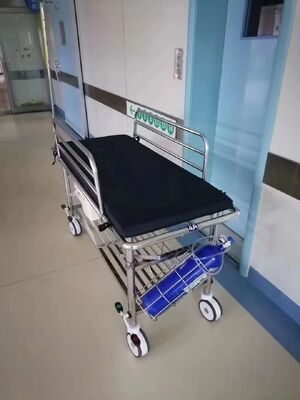
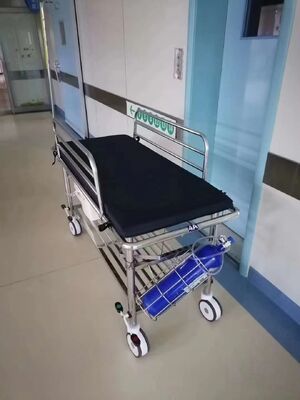
Non Magnetic Medical Stretcher with 240 Kg Max Load and Full Surround Rubber Bumper for Safe Patient Transport

| Brand Name | Jovi |
|---|---|
| Certification | ISO9001 |
| Model Number | 1-cff-09 |
| Document | JVVM-NMT-Series SPE and Quo...on.pdf |
| Minimum Order Quantity | 1set |
| Price | $1200-$1580 |
| Packaging Details | In Wooden Case Or Customized |
| Delivery Time | Within 15 Working Days |
| Payment Terms | T/T |
| Supply Ability | 300 Set / Month |
Product Details
| Max Load | 240 Kg | Dimensions | 1900 Mm X 600 Mm X 150 Mm |
|---|---|---|---|
| Net Weight | 12 Kg | Wheel Type | 4 Swivel Wheels With Brakes |
| Side Rail Material | Impact-resistant Polycarbonate | Deck Height | 14 Inches |
| Highlight | 240Kg Stretcher,Premium Stretcher Non-Magnetic,Professional Non-Magnetic Medical |
||
Product Description
Carbon-Fiber MRI Stretcher with Side Rails
The Carbon-Fiber MRI Stretcher with Side Rails represents the ultimate in lightweight, high-strength patient transport. Weighing only 24 pounds, this stretcher can be easily maneuvered by a single staff member, reducing physical strain and improving transport efficiency. The carbon-fiber frame is not merely lightweight – it also provides exceptional stiffness and impact resistance, outperforming aluminum in both metrics.
Carbon fiber is inherently non-magnetic and non-conductive, making it ideal for MRI environments. Unlike metals that can induce eddy currents or become projectiles, carbon fiber produces no image artifacts and remains completely safe in fields up to 3T. The frame is laid up using a unidirectional prepreg process, with fibers oriented to maximize strength along the primary stress axes. The result is a stretcher that can support 400 pounds with minimal deflection – less than 0.2 inches at full load.
Side rails are made of impact-resistant polycarbonate and lock into place using non-metallic clips. Each rail can support up to 50 pounds of lateral force, preventing patients from rolling off the stretcher during transport. The rails are height-adjustable in three positions – 4, 8, and 12 inches above the deck – accommodating patients of different sizes and levels of mobility. When not needed, the rails fold completely flat against the deck, reducing the stretcher’s width to 22 inches for passage through narrow doorways.
The deck is perforated with a pattern of small holes that serve two purposes. First, they allow fluids to drain away from the patient, reducing the risk of skin maceration or infection. Second, they provide secure anchoring points for restraint straps and accessory mounts. The perforations are chamfered to prevent edge damage to straps or tubing. The deck material is a carbon-fiber-reinforced thermoplastic that can be cleaned with standard hospital disinfectants without degradation.
Four 5-inch casters are mounted at the corners, each with dual ceramic bearings and conductive rubber treads. Two of the casters are swiveling with total-lock brakes; the other two are fixed-direction with directional locks. This configuration provides excellent maneuverability while allowing the stretcher to track straight when desired. The casters are recessed into the frame to reduce overall height – the deck sits just 14 inches above the floor, facilitating patient transfer from hospital beds.
Clinical applications are particularly suited to transport-heavy departments. The lightweight design reduces the risk of staff injury during repeated lifts and maneuvers. The carbon-fiber construction is also non-corroding, making this stretcher suitable for MRI suites with high humidity or frequent disinfection. Optional accessories include a non-magnetic IV pole that mounts to the side rail, an oxygen cylinder holder that attaches to the undercarriage, and a head immobilizer for trauma patients.
Recommended Products
