


All Products
-
Nuclear Radiation Protection
-
Nuclear Radiation Detector
-
Copper Foil Shielding
-
RF Shielded Doors
-
RF Shielded Windows
-
Radiation Protection Lead Glass
-
Non Magnetic Tool Kit
-
RF Shielded Chamber
-
Honeycomb Waveguide Air Vents
-
Conductive Adhesive Copper Tape
-
Copper Wire Mesh
-
X Ray Lead Glass
-
EMI Shielding Gasket
-
Electrically Conductive Fabric
-
Radiation Protection Door
-
Radiation Protection X Ray
-
Faraday Cage MRI
-
Copper Wire Wool
-
MRI LED Lighting
-
Non Magnetic Wheelchair
-
Non Magnetic Stretcher
-
 AnasBrass honeycomb vent Looks Very Nice
 -
 SatheeshMRI/RF doors are shining with handles, Thank you My friend.
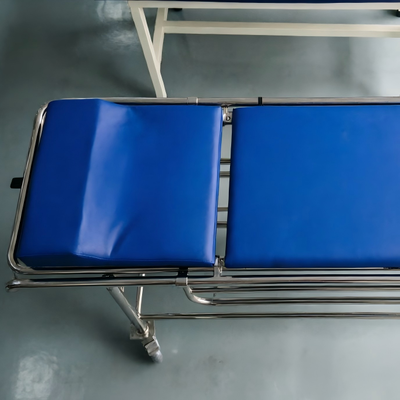
8 Kg Lightweight MRI Stretcher with MRI RF Room Shielding and Durable Non Magnetic Stretcher for Medical Transport


| Brand Name | Jovi |
|---|---|
| Model Number | 1-cff-09 |
| Document | JVVM-NMT-Series SPE and Quo...on.pdf |
| Minimum Order Quantity | 1set |
| Price | $1200-$1580 |
| Packaging Details | In Wooden Case Or Customized |
| Delivery Time | 5-8 Work Days |
| Payment Terms | T/T |
| Supply Ability | 300 Set / Month |
Product Details
| Weight | 8 Kg | Deck Length | 52 Inches |
|---|---|---|---|
| Deck Width | 22 Inches | Deck Height | 16 Inches |
| Foam Thickness | 2-inch | Caster Diameter | 4 Inches |
| Highlight | Shielding Stretcher,Premium Shielding Stretcher,Professional Mri Non-Magnetic |
||
Product Description
Pediatric Non-Magnetic MRI Stretcher
The Pediatric Non-Magnetic MRI Stretcher is specifically designed for children weighing up to 120 pounds and measuring up to 52 inches in height. The smaller footprint – 52 inches long by 22 inches wide – allows the stretcher to be maneuvered easily through pediatric hospital wards and into MRI suites that may have been designed with adult equipment in mind. The reduced size also makes the stretcher less intimidating for young patients, who can be frightened by the scale of adult medical equipment.
The deck is padded with a 2-inch-thick foam layer covered in a seamless, fluid-proof vinyl. The foam is medical-grade, resisting the growth of bacteria and fungi. The deck surface is slightly contoured to cradle the child’s body, reducing lateral movement during transport. The deck is also radiolucent, allowing portable X-ray to be performed without moving the child – a significant advantage for pediatric trauma cases where minimizing handling is critical.
Colorful composite side panels are a distinctive feature of this stretcher. Available in blue, green, pink, or yellow, the panels can be chosen to match the child’s preference or the hospital’s pediatric branding. The panels are removable for cleaning and can be replaced if damaged. Beneath the decorative panels are structural side rails that provide roll-off protection; these rails are made of impact-resistant polycarbonate and meet all relevant safety standards for pediatric medical devices.
All edges of the stretcher are rounded, and no metal is exposed. This is not merely an aesthetic choice – it prevents children from catching fingers or clothing on sharp corners and eliminates any risk of ferromagnetic exposure. The push handles are covered in soft rubber that is also rounded, providing a comfortable grip for staff while minimizing the risk of injury to a child who might reach out and touch the handle during transport.
The four casters are 4 inches in diameter – smaller than adult stretcher casters to keep the deck low to the ground. The deck height is just 16 inches, making it easy for parents or staff to lift a child onto the stretcher from floor level. The casters have soft rubber treads that are quieter than standard medical casters; this reduces noise-induced anxiety in young patients. Each caster has a locking brake that engages with a gentle foot press – the brake mechanism requires less force than adult models, accommodating staff who may be smaller in stature.
Two child-safe restraint straps are provided. The straps are made of soft, padded nylon webbing and close with plastic clips that require two independent actions to open. This design prevents accidental release by a curious child while still allowing rapid release by an adult. The straps attach to the deck via slots that are reinforced with brass grommets – the only metal in the entire assembly, and non-ferromagnetic. Each strap is adjustable in length to accommodate children of different sizes.
The stretcher can remain permanently inside the MRI room, eliminating the need to bring adult equipment into the pediatric zone. This permanent placement also streamlines the sedation-to-scan workflow: children can be sedated on the stretcher outside the MRI room, then wheeled directly into the bore without being transferred to a different device. One children’s hospital reported that this workflow reduced the average time from sedation administration to scan start by 18 minutes.
Optional accessories include a transparent acrylic canopy that fits over the deck, creating a contained environment for infants or children who require oxygen or isolation. The canopy has multiple access ports for tubing and monitoring leads, and it can be lifted off in one piece for cleaning. A head immobilizer set, sized for pediatric anatomy, is also available. The immobilizer uses foam pads and hook-and-loop straps to secure the head during neuroimaging, and it is completely non-magnetic.
Recommended Products
